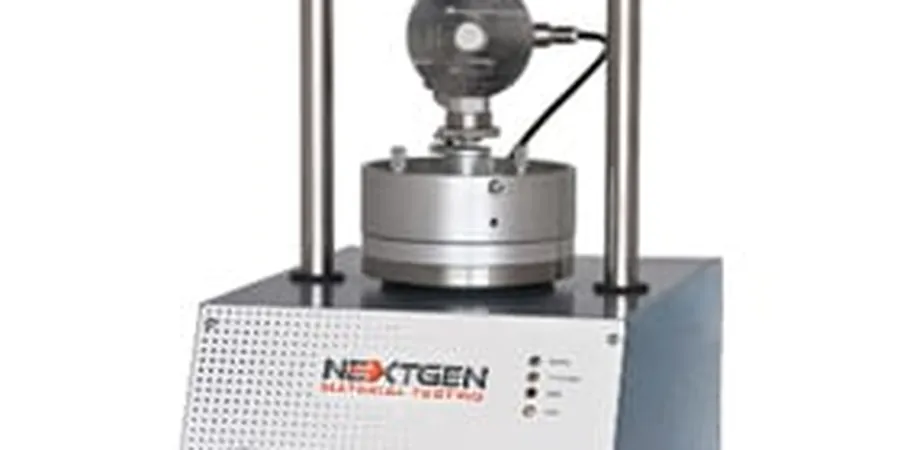
We run oedometer consolidation tests using a front-loading consolidation frame with a calibrated load yoke and digital dial gauges. The setup sits in a temperature-controlled room at our Mackay facility, where we maintain the 20°C ± 1°C required by AS 1289.6.6.1. Each specimen is trimmed from a thin-walled tube sample, then placed in the stainless-steel ring and submerged. We apply incremental loads from 12.5 kPa up to 3200 kPa, logging deformation at each step. Before we start loading, we often correlate the oedometer results with a sieve and hydrometer analysis to link compressibility with grain-size distribution — a step that saves time in later interpretation.
For Mackay's soft alluvial clays, the oedometer test gives the compression index Cc and cv needed to predict primary settlement under fill loads.
Methodology and scope
Mackay grew on the floodplain of the Pioneer River, and much of its post-war expansion sits on soft alluvial clays and silty sands. These deposits are normally consolidated to lightly overconsolidated, with moisture content often exceeding the liquid limit. That makes the oedometer test essential for predicting primary consolidation settlement under embankments and building pads. We determine the compression index Cc, recompression index Cr, and coefficient of consolidation cv from the e-log p curve. The equipment allows both incremental load and constant-rate-of-strain methods. For projects on the northern beaches or the industrial estates near Paget, we combine oedometer data with a field vane shear test to verify undrained shear strength alongside settlement estimates.
Technical reference image — Mackay
Local considerations
A common mistake we see in Mackay is assuming that Standard Penetration Test N-values alone can predict settlement. They cannot. One contractor designed a 3-metre-high road embankment near Bakers Creek using only SPT correlations — the fill settled 250 mm in the first year. The oedometer test would have shown the high compressibility of the soft clay layer at 4 m depth. Without Cc and cv values from a proper consolidation test, you are guessing at time-rate behaviour. That leads to differential settlement, cracked pavements, and costly remediation. We always recommend a minimum of one oedometer test per soil layer for any structure with a design life over 10 years.
Undisturbed thin-walled tube (U50/U75) or block sample
Temperature control
20 ± 1°C, 100% relative humidity chamber
Associated technical services
01
Standard Incremental Load Oedometer Test
The classic method: 24-hour load increments from 12.5 to 3200 kPa, with deformation readings at log-time intervals. We deliver a full consolidation report including e-log p curve, Cc, Cr, cv, mv, and preconsolidation pressure. Turnaround is 10 working days from sample receipt.
02
Constant Rate of Strain (CRS) Oedometer Test
For projects needing faster results or continuous data. We apply a constant strain rate of 0.001–0.01 mm/min and record pore pressure at the base. This method provides cv at every load increment without waiting 24 hours. Ideal for soft clays in Mackay where consolidation times are long.
Applicable standards
AS 1289.6.6.1 – Determination of consolidation properties (oedometer), AS 1726 – Geotechnical site investigations, AS 4678 – Earth retaining structures
Frequently asked questions
What soil samples do I need to provide for an oedometer test in Mackay?
You need undisturbed samples collected with a thin-walled tube sampler (U50 or U75 size). Block samples from test pits also work if carefully trimmed. The sample must be at natural moisture content and stored in a sealed tube or waxed block. We cannot use disturbed or remoulded samples for consolidation testing.
How long does an oedometer test take and when do I get results?
A standard incremental load test with eight load increments takes 10 working days from sample arrival. The CRS method can be completed in 5 days. We issue a PDF report with the e-log p curve, tabulated data, and interpreted parameters (Cc, Cr, cv, pc). Hard copies available on request.
Why is the oedometer test critical for Mackay's alluvial soils?
Mackay's alluvial clays have high moisture content and low preconsolidation pressure. The oedometer test measures exactly how much these soils will compress under load and how fast. Without it, you risk differential settlement of embankments, slabs, and road pavements — a common failure mode in areas like North Mackay and the industrial estates.
What is the typical cost range for an oedometer consolidation test in Mackay?
The cost for a standard incremental load oedometer test in Mackay ranges from AU$350 to AU$610 per test, depending on the number of load increments and whether you need CRS. Volume discounts apply for multiple tests from the same project. Contact us for a quote based on your specific soil profile.