Mackay sits on a coastal floodplain where the Pioneer River meets the Coral Sea, an area with annual rainfall exceeding 1,600 mm. This means the shallow soils here — often soft clays and loose sands — are saturated most of the year. Getting reliable undisturbed samples is not optional; it is the only way to measure true in-situ density, fabric, and shear strength. We use thin-walled Shelby tubes pushed hydraulically into the borehole base, retrieving cores that preserve the natural soil structure for lab testing. The process aligns with AS 1726-2017, ensuring each sample is sealed, labeled, and transported without vibration or temperature shock. Before mobilising, we often cross-check the borehole log with a resistivity survey to map stratigraphy changes, then extract the tube exactly at the target depth.
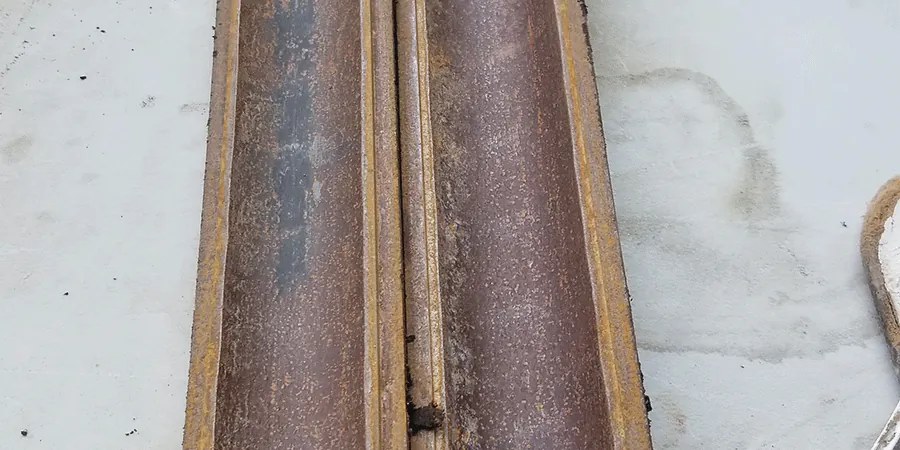
A Shelby tube sample preserves the soil's natural density and fabric — critical for reliable consolidation and strength parameters in Mackay's soft coastal clays.
Methodology and scope
In Mackay, the difference between a clay near the CBD and one on the northern beachfront at Bucasia is marked. The CBD clay is often a firm silty clay with some sand lenses, while the coastal strip yields soft, high-plasticity clays with organic traces. For both, we insert the Shelby tube at a steady 20–30 cm/s to minimise disturbance. Each tube is 760 mm long and 76 mm in diameter, giving enough material for a full suite of index and strength tests.
We trim and wax-seal both ends before wrapping in foam-lined crates.
Transport to the lab happens within 24 hours, with temperature logging inside the vehicle.
This method lets us run reliable Atterberg limits, unconfined compression, and consolidation tests back at the lab. For stiff soils where a thin-wall tube might buckle, we first conduct a DCP test at the same depth to confirm the tube can advance without damage. The combination of careful field procedure and quick logistics means the lab receives material that still behaves like it does in the ground.
Technical reference image — Mackay
Local considerations
Mackay's shallow water table — often 1.5 to 3 m below ground — creates a tricky condition for undisturbed sampling. If the tube is advanced too fast, the pore water pressure builds up and pushes soil ahead of the cutting edge, altering the sample's density and fabric. This is especially true in the soft estuarine clays near the Pioneer River, where a one-second hesitation can mean the difference between a true sample and a pushed-in plug. To counter this, we always monitor the hydraulic pressure gauge during advancement and stop immediately if resistance drops suddenly, which signals a plugged tube. If the borehole is unstable, we first install temporary casing before deploying the Shelby tube.
760 mm length x 76 mm OD (nominal), 1.6 mm wall thickness
Advancement rate
20–30 cm/s (controlled hydraulically)
Maximum penetration depth
600 mm per drive (to leave 160 mm for trimming)
Sample recovery ratio
≥ 95% in cohesive soils (AS 1726-2017)
Sealing method
Double wax seal + screw cap + foam crate
Handling temperature range
5–30 °C with continuous datalogger
Maximum storage time before testing
7 days (14 days with refrigeration)
Associated technical services
01
Block sampling for stiff clays
Where the soil is too stiff for a thin-walled tube, we cut hand-carved block samples from test pits. Each block is trimmed to 200 mm cubes, wrapped in cling film and wax, then transported in rigid crates. This preserves the natural fissures and fabric that a Shelby tube might smear.
02
Piston sampling for very soft clays
In Mackay's softest estuarine deposits, a stationary piston sampler prevents soil from entering the tube before it reaches depth. The piston is retracted only after the tube is at target depth, yielding virtually undisturbed cores even in clays with undrained shear strength below 20 kPa.
Applicable standards
AS 1726-2017 Geotechnical site investigations, AS 1289.6.0 Standard Practice for Thin-Walled Tube Sampling of Fine-Grained Soils, AS 4678-2002 Earth-retaining structures (reference for sample quality)
Frequently asked questions
When should I choose a Shelby tube sample over a split-spoon SPT sample?
Use a Shelby tube when you need accurate consolidation, permeability, or triaxial strength parameters. Split-spoon samples are good for identifying soil types but they disturb the structure, so they cannot give you reliable modulus or pre-consolidation values.
How deep can a Shelby tube sample be taken in Mackay's soft clays?
With hydraulic push, we routinely reach 6–8 m in soft clays. Beyond that, the rod string flexes and the tube may deviate. For deeper targets, we switch to a fixed-piston sampler or use continuous core drilling with a triple-tube system.
What tests are performed on the undisturbed samples once they reach the lab?
Standard tests include unconfined compressive strength (UCS), consolidated undrained triaxial (CU), one-dimensional consolidation, and Atterberg limits. We also run specific gravity and moisture content on the trimmings.
How much does undisturbed sampling with Shelby tube cost in Mackay?
The cost typically ranges from AU$570 to AU$1,680 per sample, depending on depth, number of tubes, and site access. This includes mobilisation, tube materials, field extraction, sealing, and transport to our lab. Volume discounts apply for projects requiring more than six samples.