Mackay sits on a coastal plain underlain by Quaternary alluvium and Tertiary basalt flows, with the Pioneer River cutting through the city centre. The combination of soft estuarine clays and residual soils derived from volcanic rock creates a wide range of undrained shear strengths — from less than 20 kPa in the tidal flats to over 150 kPa in the basaltic rises. For any foundation or earthworks design here, the triaxial test provides the most reliable measure of effective stress parameters c' and phi'. Without these data, settlement predictions and slope stability calculations remain guesswork. We perform the test on undisturbed samples recovered from boreholes or block samples, following the consolidated-undrained (CU) procedure with pore pressure measurement, which yields the drained strength envelope needed for long-term stability analyses in Mackay's variable subsoils.
The triaxial test delivers the effective stress parameters c' and phi' that underpin every reliable slope stability and foundation design in Mackay's alluvial soils.
Methodology and scope
Since the 1970s expansion of the sugar and coal export terminals, Mackay has seen steady infill development on low-lying areas originally used for cane farming. These reclaimed sites often contain compressible organic clays and peat layers that require careful characterisation. The triaxial test allows us to determine whether a soil will behave in a drained or undrained manner under load — a critical distinction for embankments and shallow foundations. We routinely set up multistage triaxial tests to maximise data from limited sample length, and we pair the results with consolidation tests to obtain the full stress-strain-time response. In projects involving deep excavations or retaining walls, the test data feeds directly into slope stability analyses that must comply with AS 4678 for earth-retaining structures. Our laboratory holds NATA accreditation for the triaxial procedure, ensuring every result is traceable to national standards.
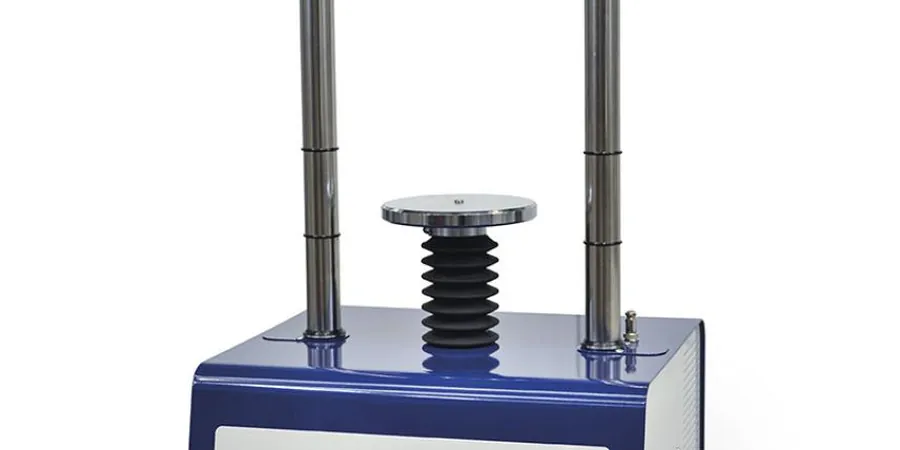
Technical reference image — Mackay
Local considerations
The tropical monsoon climate of Mackay brings over 1600 mm of rainfall annually, with the wet season from December to April. This pattern saturates the upper soil profile and raises the water table close to the surface for months at a time. In such conditions, a triaxial test performed on a sample at natural moisture content may underestimate the softening that occurs during prolonged wet periods. We therefore run additional tests on specimens that have been pre-soaked or consolidated to field-equivalent effective stresses. The risk of ignoring this seasonal effect is a foundation design that appears safe in the dry season but fails during the first wet season. The triaxial test, when properly planned with local rainfall data and groundwater monitoring, accounts for this cyclic behaviour and produces parameters that remain valid year-round.
Rapid test on three specimens at different confining pressures to determine undrained shear strength. Ideal for short-term stability checks on clay fills and embankments in Mackay.
02
Consolidated Undrained (CU) Triaxial Test with Pore Pressure
Full effective stress analysis measuring both total and pore pressure response. Essential for slope stability and foundation design on saturated alluvial clays.
03
Consolidated Drained (CD) and Multistage Tests
Slow drained test for granular soils and stiff clays, plus multistage option to derive strength envelope from a single specimen. Saves sample volume and time on constrained projects.
Applicable standards
AS 1289.6.4.1 – Method for the determination of the compressive strength of soils (triaxial test), AS 1726 – Geotechnical site investigations (sampling and testing requirements), AS 1289.6.4.2 – Standard test method for consolidated undrained triaxial compression test for cohesive soils
Frequently asked questions
How does the triaxial test differ from unconfined compression or direct shear tests for Mackay soils?
The triaxial test applies a controlled confining stress around the specimen, replicating the in-situ stress condition. Unconfined compression cannot simulate confinement, so it underestimates strength in Mackay's stiff clays. Direct shear forces a failure plane, while triaxial allows the sample to find its natural failure orientation. For soft estuarine clays and residual basalt soils, the triaxial gives more representative effective stress parameters.
What is the typical cost range for a triaxial test in Mackay?
A standard CU triaxial test on three specimens, including sample preparation, saturation, consolidation, and shear phases, typically costs between AU$3,010 and AU$4,080 depending on the number of stages and urgency. Multistage tests or those requiring back-pressure saturation may fall at the higher end. We provide a fixed quote after reviewing the sample quality and project requirements.
How long does a triaxial test take and what affects the turnaround?
A basic UU test can be completed in 24–48 hours. A full CU test with pore pressure measurement takes 3 to 7 days for a three-specimen set, depending on the consolidation time of the clay. Slow-draining soils from the Mackay floodplain may require longer consolidation periods. We coordinate with your project schedule to prioritise critical samples without compromising the test procedure.
Can the triaxial test be combined with other laboratory tests to reduce overall project costs?
The reference range for this service in Mackay is AU$3.010 - AU$4.080. The final price depends on the project scope and volume.